Home / All / Pipe Fitting / Case Study of Typical Pipe Fitting Applications: A Comprehensive Analysis from Selection to Installation
Case Study of Typical Pipe Fitting Applications: A Comprehensive Analysis from Selection to Installation
Case Study of Typical Pipe Fitting Applications: A Comprehensive Analysis from Selection to Installation
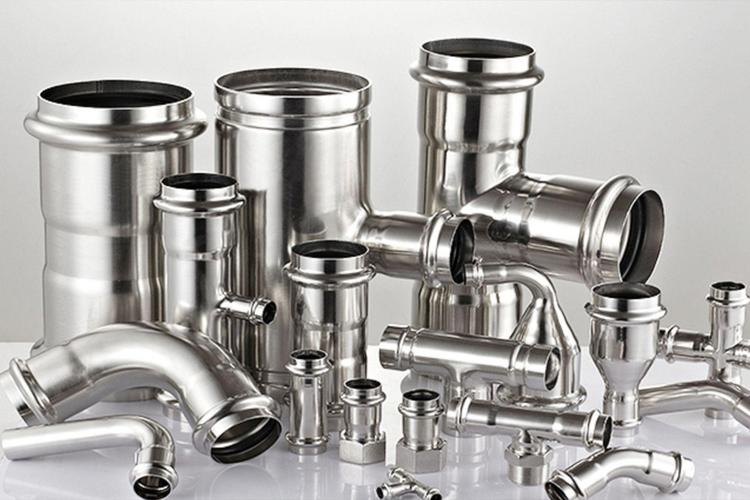
Case Content: Centerless Grinding Process for Metal Pipe Fittings
I. Project Background
Metal pipe fittings are widely used in industrial production, such as automotive manufacturing, aerospace, petrochemicals, and other fields. However, during the processing of metal pipe fittings, particularly in the grinding stage, technical challenges often arise. For instance, the surface roughness of the fittings has high requirements, and the material of the fittings is relatively soft, making them prone to scratching during grinding. Additionally, the walls of the pipe fittings are thin, and they can easily deform due to thermal expansion during the grinding process, making it difficult to control dimensional accuracy.
To address these issues, a metal processing factory decided to adopt the centerless grinding technique for processing metal pipe fittings. Centerless grinding is an efficient method for cylindrical grinding, suitable for the grinding of cylindrical workpieces, and can ensure high precision and surface quality of the fittings.
II. Project Objectives
Improve the surface roughness of metal pipe fittings to meet product quality requirements.
Ensure the dimensional accuracy of metal pipe fittings and reduce deformation caused by grinding.
Improve grinding processing efficiency and reduce production costs.
III. Project Plan
Equipment Selection:
Select a centerless grinding machine with high precision and rigidity to ensure stability and accuracy during the grinding process.
Equip the machine with grinding wheels that have sufficient cutting force and porosity technology to accommodate the grinding needs of different materials and specifications of pipe fittings.
Process Design:
Develop detailed grinding process parameters based on the material and specifications of the pipe fittings, including grinding wheel speed, feed rate, grinding pressure, etc.
Establish a strict quality control system to monitor and adjust the grinding process in real-time, ensuring that the surface roughness and dimensional accuracy of the pipe fittings meet the required standards.
(Note: The above content is a brief outline. Depending on the specific requirements, additional details such as the specific grinding process steps, equipment specifications, quality control measures, and actual case results could be added to further enrich the case content.)